

Reshaping America’s Maritime Edge
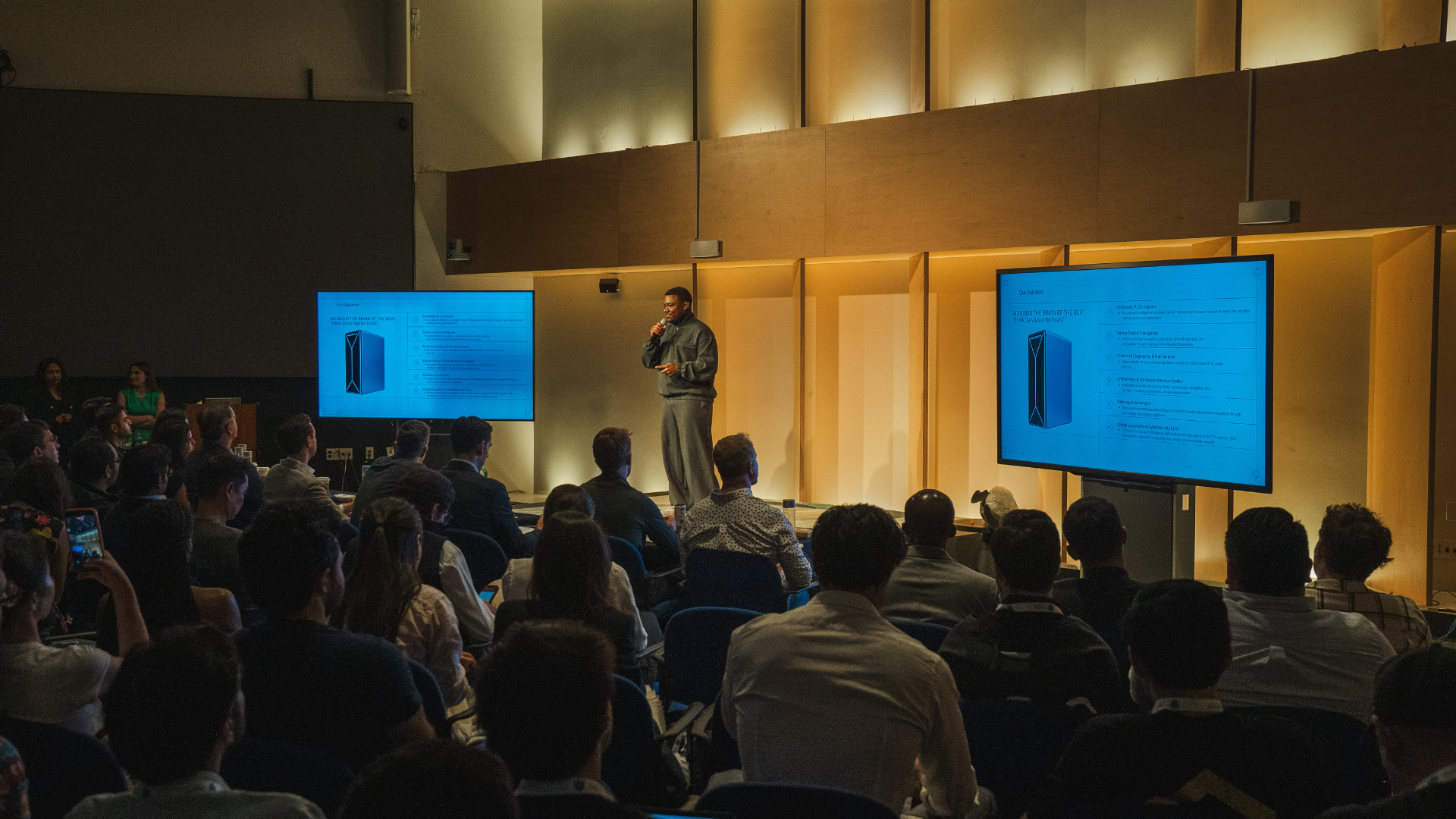
Pollentia recently attended the UpNext event in Washington, D.C., an industry-focused gathering centered on strengthening America’s maritime edge and advancing the future of domestic shipbuilding. The event convened senior government officials, defense and transportation leaders, shipbuilders, infrastructure partners, and technology executives to examine how the U.S. maritime sector can modernize, scale, and remain globally competitive in the years ahead.
The conversations reflected a shared urgency. Aging infrastructure, fragmented systems, workforce constraints, and slow technology adoption were repeatedly identified as challenges holding back progress. Rather than framing these issues as isolated problems, the discussions focused on how they intersect across the broader maritime ecosystem and what coordinated action is required to address them at scale.
Grounded Conversations on the State of U.S. Shipbuilding
During the evening discussions, Pollentia CEO Tyler Temple joined dinner conversations with corporate executives and public-sector leaders who are directly involved in shaping the future of American shipbuilding. These conversations were not abstract or theoretical. They focused on real operational constraints facing U.S. shipyards and suppliers, from production bottlenecks and system complexity to the difficulty of maintaining and operating vessels over long service lives.
A recurring theme was resilience. Participants emphasized the importance of keeping shipbuilding capacity onshore, strengthening domestic supply chains, and ensuring that modernization efforts support long-term sustainability rather than short-term gains. The group acknowledged that progress will require alignment across design, manufacturing, operations, and infrastructure, rather than isolated improvements in any single area.
Embedding Intelligence Where Work Actually Happens
Pollentia’s perspective throughout the evening was rooted in practical experience working with vessels, manufacturers, and operators. Rather than approaching maritime innovation as a software challenge alone, the discussion emphasized the need for intelligence and modern systems to be embedded directly into vessels, fleets, and supporting infrastructure.
The focus was on enabling shipbuilders and manufacturers to work faster while reducing complexity, rework, and long-term maintenance burden. By integrating intelligence at the platform level, vessels can become easier to operate, easier to maintain, and better suited to evolve over time as requirements change. This approach resonated with industry leaders who are seeking ways to modernize without disrupting existing production workflows or introducing unnecessary risk.
Alignment Between Public Strategy and Private Execution
Another key theme throughout the event was alignment between government priorities, private-sector execution, and long-term national strategy. Senior officials highlighted the importance of public–private collaboration in accelerating shipbuilding capacity, modernizing commercial and defense fleets, and reinforcing the United States’ maritime presence on the global stage.
Pollentia’s role in that conversation centered on how unified platforms and integrated intelligence can help close long-standing gaps between design, production, operations, and lifecycle support. By reducing fragmentation and improving continuity across these phases, shipbuilders and operators can move faster while maintaining higher standards of reliability and performance.
Building the Future Through Coordination, Not Isolation
The UpNext event reinforced a shared understanding that the future of American shipbuilding will not be driven by isolated upgrades or one-off technologies. Sustainable progress will come from coordinated efforts that connect manufacturers, shipyards, operators, infrastructure partners, and government stakeholders under a common operating framework.
For Pollentia, the evening served as both validation and momentum. It affirmed that modern marine systems, when designed with scale, interoperability, and real-world constraints in mind, can play a meaningful role in strengthening the U.S. maritime industry. More importantly, it underscored that the next chapter of American shipbuilding will be defined by collaboration, clarity of purpose, and the ability to translate strategy into execution for decades to come.