The Legacy
Nearly everything in modern life spent time on a ship. The phone in your pocket, the fuel in your tank, the steel in your building, the food on your shelves: it all moved through a $2.5 trillion ocean economy that underpins almost every supply chain on Earth. Yet the vessels carrying that weight are, on average, more than two decades old, run by shrinking crews, and monitored by scattered technology that predates the smartphone. In 2026, the gap between what we ask of ships and what ships can see about themselves has become the most expensive blind spot in global trade, paid for in billions of dollars of insurance claims, in vessels lost, and in seafarers who never made it home. What follows is the full picture: the size of the market at stake, the true cost of business as usual, why failures keep repeating, the industry's decisive turn toward AI, and what it actually takes to build a ship that understands itself.
Every disaster at sea looks sudden. Almost none of them are.
An engine room fire does not begin with flame. It begins weeks earlier, with a maintenance task pushed to the next port, a fitting that was almost right, insulation that never got replaced, oil settling on a surface that runs hot. The fire is the last domino. By the time the alarm sounds, the important part of the story is already over.
We built Pollentia because that story repeats itself thousands of times a year across the largest trade system humanity has ever operated, and because, for the first time, the technology, the economics, and the regulators are aligned to end it.
A Market Too Big to Run Blind
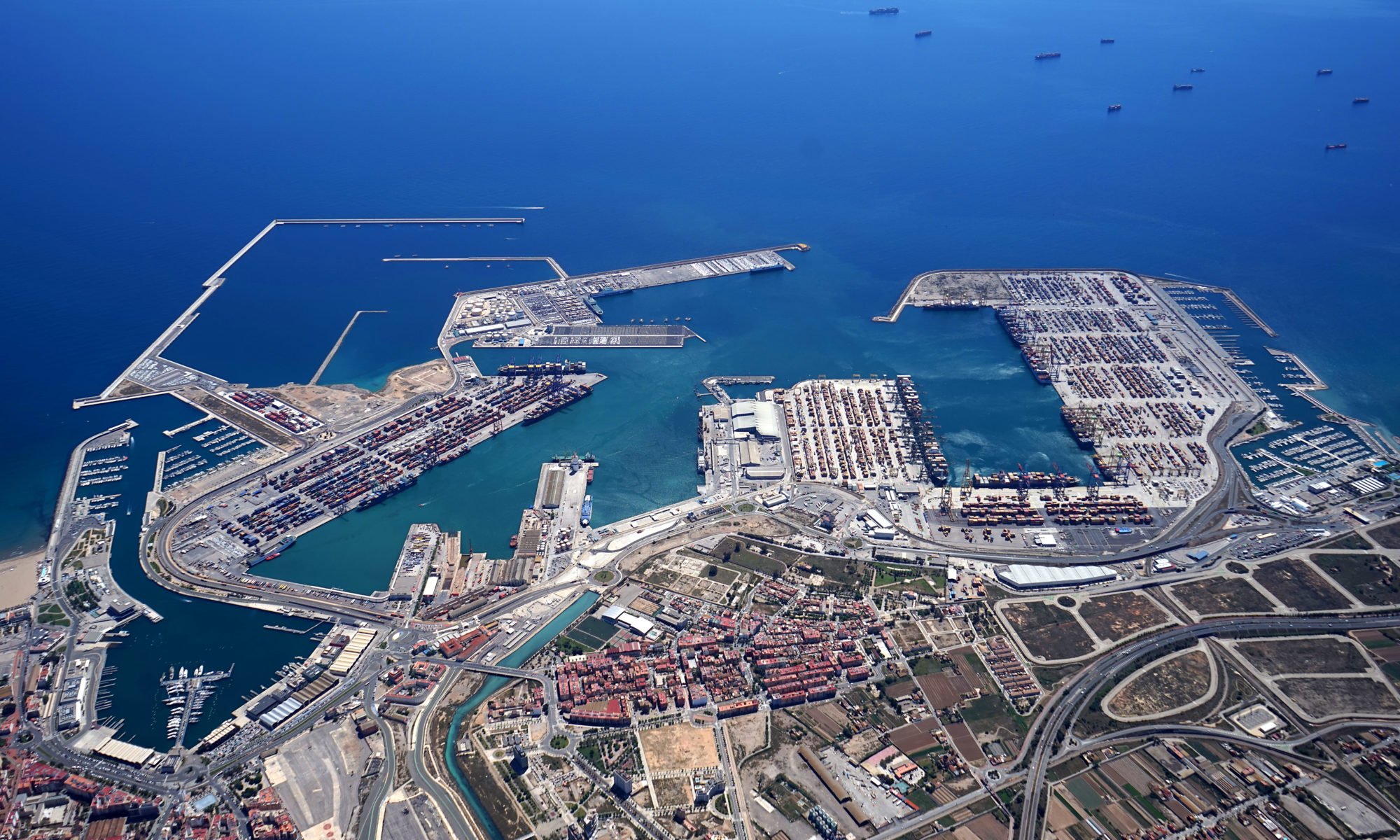
Roughly 90 percent of international trade moves across oceans. The United Nations values the ocean economy at $2.5 trillion, a figure that has grown two and a half times since 1995, outpacing the growth of the world economy itself. That trade is carried by more than 85,000 merchant ships crewed by 2.57 million seafarers.
The industry is investing like the future has already arrived. Shipbuilding demand hit roughly $204 billion in new orders in 2024, the highest intake in 17 years, and the global shipbuilding market now runs above $200 billion a year. Yards are racing to deliver LNG carriers, methanol-ready container ships, and next-generation cruise vessels.
But here is the paradox that defines maritime in 2026. The average working ship is more than 22 years old. Over half the world's fleet has passed its fifteenth birthday. The vessel most likely to become a total loss averages 29 years of age. The industry is ordering tomorrow's ships while operating yesterday's, and both generations share the same weakness: no unified way to see themselves.
The Bill for Business as Usual
The cost of that blindness is not theoretical. It is documented, audited, and paid every single year.
Around 3,000 shipping incidents are reported annually. Machinery damage and failure is the number one cause, accounting for well over half of them, 1,860 incidents in 2024 alone. Fires hit a decade high of 250 that same year, and fire has destroyed more than 100 vessels outright over the past ten years. Two out of three of those fires start in the engine room, most often when fuel or lubricating oil sprays onto a hot surface.
Behind the machinery statistics stands a human one. Allianz estimates that 75 to 96 percent of marine accidents involve human error, and its analysis of nearly 15,000 marine liability claims found human error a primary factor in 75 percent of total claim value, more than $1.6 billion in losses. Zoom out and the scale becomes staggering: insurers logged over 240,000 marine claims worth approximately 9.2 billion euros in just five years.
Individual casualties tell it in sharper relief. The Felicity Ace burned and sank in 2022 with nearly 4,000 vehicles aboard and cargo losses estimated as high as $500 million. The Fremantle Highway fire in 2023 forced seven crew members to jump roughly 30 meters into the North Sea to escape; one sailor died. That same month, two firefighters were killed battling a car carrier fire at the dock in Newark. Five crew members were lost aboard the Sincerity Ace in the middle of the Pacific.
And every casualty ripples outward: salvage operations, months of off-hire, blocked channels, general average claims that can exceed $100 million on a single high-value cargo, insurance costs that climb across the industry, environmental exposure near protected coastlines, and families that receive a phone call no one should ever get.
Why Ships Fail Quietly
Nobody in maritime is careless about safety. The problem is structural.
A modern vessel runs on hundreds of separate systems: propulsion, power generation, fuel, fire detection, bilge, ballast, HVAC, navigation, and dozens more, sourced from dozens of manufacturers across different decades. Most were never designed to communicate with each other. The information needed to prevent nearly every casualty usually exists somewhere on board. It is simply scattered across isolated screens, proprietary interfaces, paper logs, and walk-around rounds performed every few hours.
Market analysts studying maritime AI adoption point to this exact fragmentation, disparate and non-interoperable onboard data, as the single greatest constraint holding the industry back. The barrier is not appetite. It is architecture.
Meanwhile, the demands placed on those legacy ships have compounded. Vessels have grown so large that crews are often overwhelmed before outside help can arrive. Lithium-ion batteries, already linked to major fire losses at sea, are moving through the system at six times the volume of five years ago. New low-carbon fuels are arriving faster than operational experience with them, raising machinery breakdown risk. Port stays that once lasted weeks are now measured in days, compressing every maintenance window. And the people asked to absorb all of it are disappearing: the industry is short roughly 39,000 certified officers this year and will need 113,000 more by 2030, with demand for seafarers up 35 percent in just five years.
We hand a shrinking crew a growing problem, equip them with clipboards and decades-old alarm panels, and record the result as human error. It is not a crew problem. It is a design problem.
The Industry Just Said Yes
For decades, maritime's reputation was conservatism. That era is ending, publicly and on the record.
On July 1, 2026, the International Maritime Organization's new MASS Code took effect: the first global safety framework for AI-enabled and remotely operated commercial ships, adopted this May after nearly a decade of work. The Code defines four degrees of autonomy, beginning with crews aboard supported by automated decision systems, and keeps a human master responsible for the vessel at all times. A mandatory version is targeted for adoption by 2030 and entry into force in 2032. The world's maritime regulator has formally declared that intelligent ships are no longer an experiment. They are a category.
Classification societies are moving in step. ABS describes autonomy not as a single destination but as a continuum that still relies on human involvement. Lloyd's Register reports the maritime AI market reached $4.13 billion in 2024 and is growing at 23 percent annually, with 420 organizations actively developing maritime AI in the past year, up from 276 the year before. Across the wider industry, maritime digitalization is projected to grow from $176 billion to $361 billion by 2030.
The insurers may be the loudest voice of all. Allianz's global head of marine risk consulting has argued that the industry needs its data analyzed around the clock to produce real-time findings and alerts that reduce incidents, and its marine hull leadership now describes the insurer's role as helping clients "mitigate risks before they become a damaging loss event."
Shipyards are already building for this world: digital twins in design, automated welding lines, smart systems specified in a quarter of recent newbuild orders. Regulator, class society, insurer, and builder are all pulling in the same direction. What has been missing is the layer that makes an individual ship intelligent.
What a Ship's Nervous System Actually Looks Like
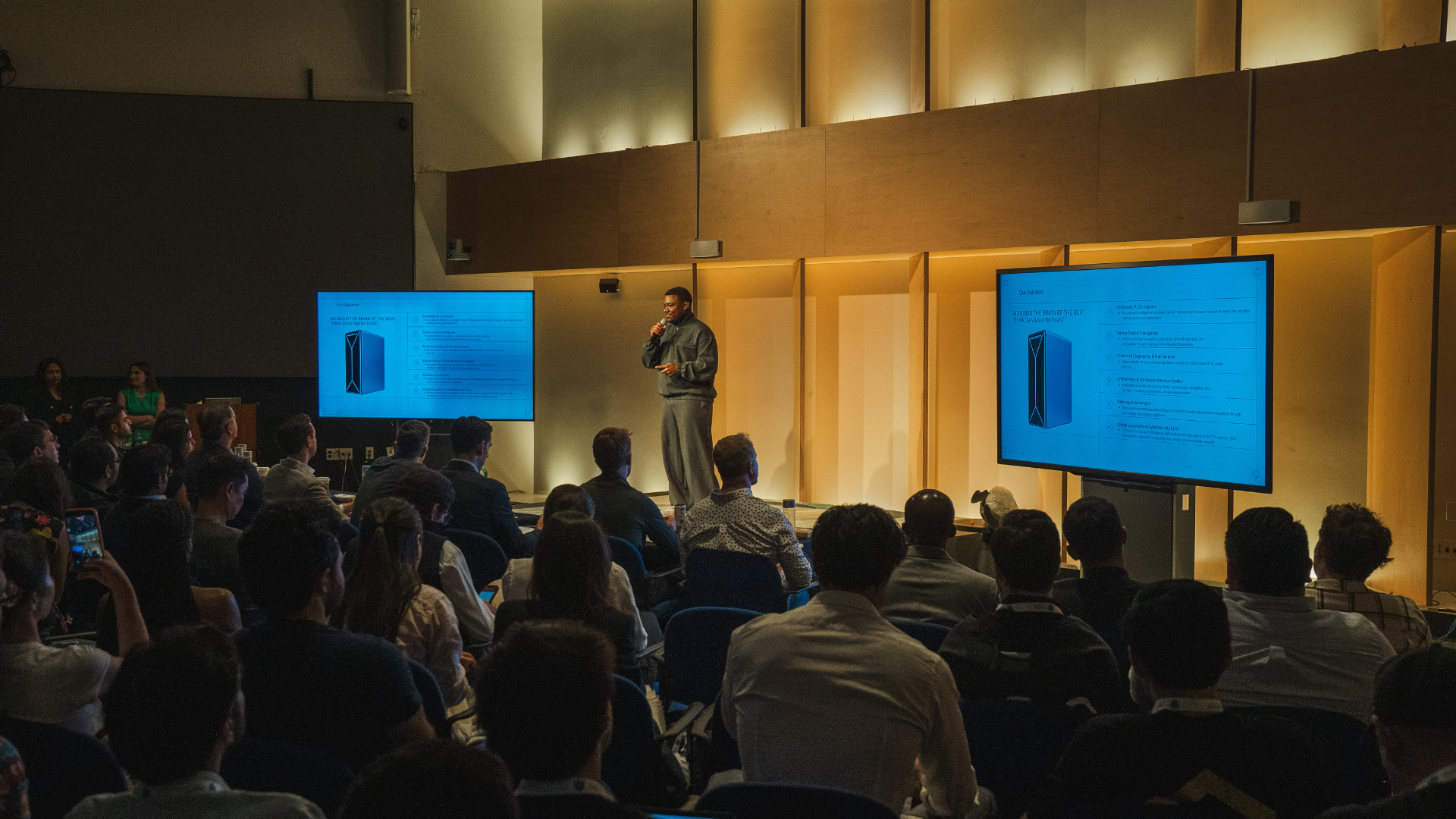
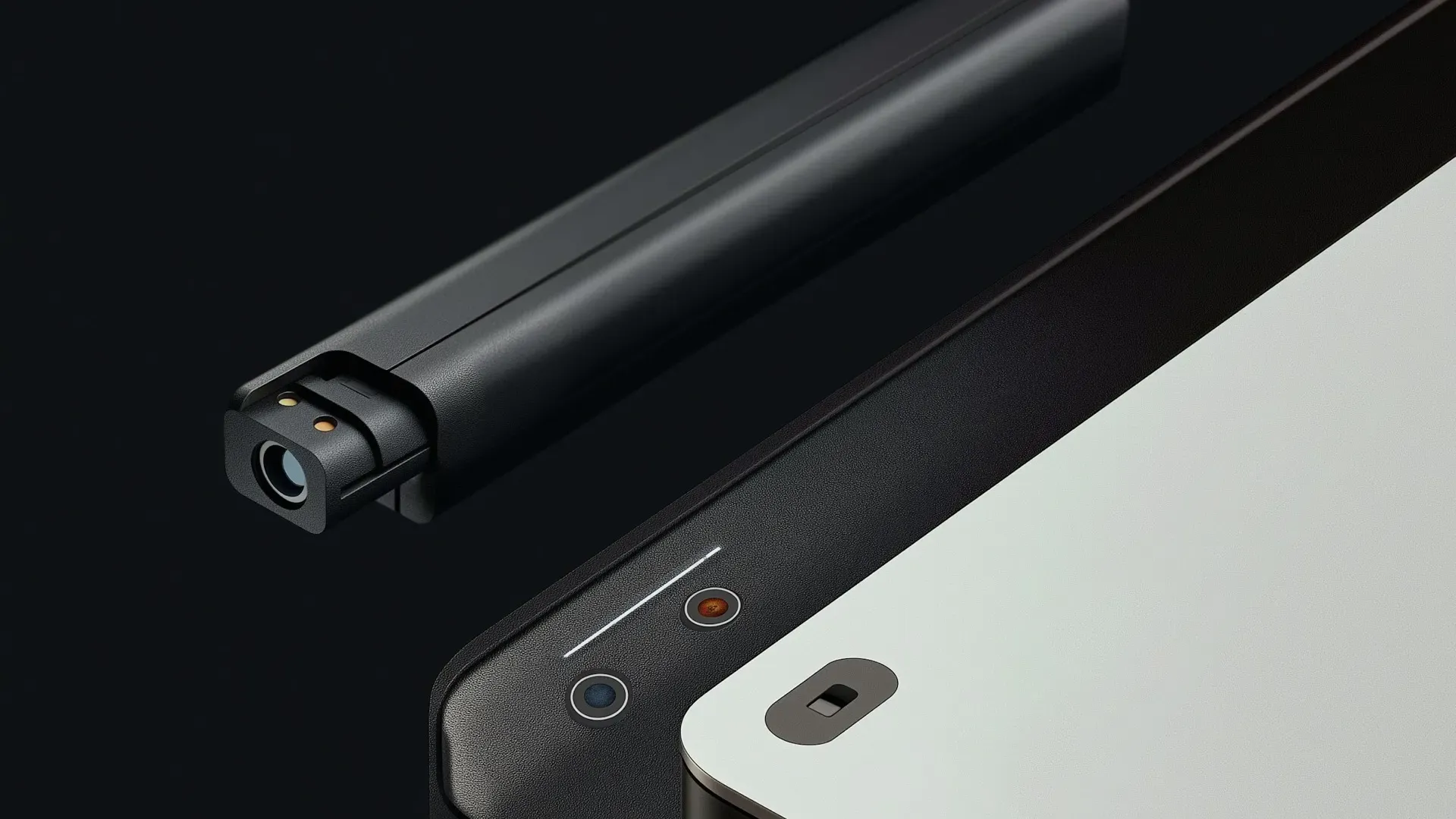
That layer is what Pollentia builds. Co-Captain is a vessel operating system and intelligence platform: the nervous system and brain of the ship.
It begins with unification. Co-Captain fuses more than 400 onboard systems into a single, live digital twin of the vessel, one continuously updated picture of everything the ship is doing, from main engine bearings to bilge levels to fire zones. The fragmentation problem that analysts call the industry's biggest constraint is the first thing we solve.
It is edge-first by design. Everything runs on hardware aboard the vessel itself, with no dependence on shore connectivity or cloud uptime. A ship mid-ocean, in a congested strait, or in a communications-denied environment gets the same intelligence as a ship at the pier. The ocean does not offer bandwidth guarantees, so we never ask for them.
It is built on a dual trust domain. A deterministic safety core, engineered to never guess, enforces hard limits and handles safety-critical functions with the predictability that regulators and crews demand. Alongside it, an AI intelligence layer learns each vessel's unique normal, every pump signature, every temperature curve, every vibration pattern, and flags drift long before a conventional alarm threshold would trip. The intelligence proposes. The safety core disposes.
Authority always stays with people. Co-Captain operates across four levels of control, from advise, to assist, to supervised action, to autonomous action, and the operator decides how much authority to grant, function by function. It is the same continuum the IMO's new code now formalizes, and it means a captain can adopt the platform at exactly the pace trust is earned.
The system grows sharper with scale. Lessons learned on one vessel harden every vessel in the network. Port and harbor intelligence extends awareness beyond the hull. New capabilities deploy securely over the air. And because the platform is pressure-tested against machine-generated casualty scenarios at massive scale, from fuel spray fires to cascading blackouts, it arrives having already lived through emergencies no crew ever should.
Co-Captain installs on newbuilds and retrofits alike, and it complements the systems shipyards and equipment manufacturers already provide rather than replacing them. The nervous system does not compete with the organs. It connects them.
The Value Equation
The economics of prevention are lopsided in the best way.
A single serious engine room fire can take a cruise ship out of service at a cost of tens of millions of dollars before repair bills even begin, a figure operators themselves have cited. A single general average event on high-value cargo can exceed $100 million. A single total loss can approach half a billion. Against numbers like those, continuous intelligence on every critical system is not a technology expense. It is the cheapest insurance policy in maritime.
The value compounds from there. Fuel now carries a carbon price under Europe's emissions rules, so every efficiency gain is a direct line item. Machinery claims inflation keeps pushing repair costs upward, which makes every avoided breakdown worth more each year. And in an industry short tens of thousands of officers, a platform that lifts the monitoring burden off exhausted crews is a retention strategy as much as a safety one.
The insurers put it plainly: risk mitigated before it becomes a loss event is the future of this business. We agree. We simply believe the mitigation belongs on the ship.
Built by People Who Fought the Fires
Pollentia was founded by a U.S. Navy Damage Controlman, trained in the oldest truth of the sea: when a ship is in trouble, no one is coming, and the difference between an incident and a catastrophe is measured in minutes and in information. Co-Captain exists to give crews both back.
Ships rarely fail all at once. They fail quietly first. Co-Captain is how someone is always listening.
The ocean went modern. It is time the ships did too.
Pollentia Marine Intelligence builds Co-Captain, the edge-first operating system and intelligence platform for vessels. To explore a pilot, a partnership, or an investment conversation, Contact Us
Sources
- Allianz Commercial, Safety and Shipping Review 2025 and 2026
- Allianz Global Corporate & Specialty, Global Claims Review and marine claims analyses
- UNCTAD, Review of Maritime Transport and Global Trade Update
- BIMCO and the International Chamber of Shipping, Seafarer Workforce Report 2026
- International Maritime Organization, International Code of Safety for Maritime Autonomous Surface Ships (MASS Code), adopted May 2026
- Lloyd's Register and Thetius, maritime AI market research, 2026
- DNV, engine room fire causes, contributors and preventive measures
- Reported casualty coverage of the Felicity Ace, Fremantle Highway, Grande Costa d'Avorio, and Sincerity Ace